
 admin
admin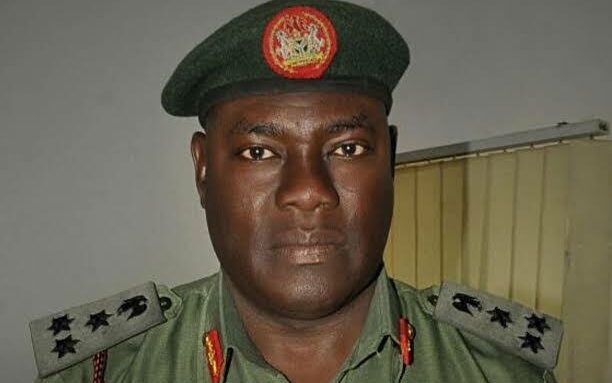
By Ozumi Abdul
“When the frog in front falls into a pit, those behind take caution. When crocodiles eat their own eggs, what will they not do to the flesh of a frog?”
These haunting words were spoken by Odewale in Ola Rotimi’s magnum opus masterpiece, The Gods Are Not to Blame, after suspicion began to creep into his mind over the mysterious death of King Adetusa and the complicity of palace chiefs.
More than two decades after reading that book as a secondary school literature student, those lines sadly return today with frightening relevance staring at our faces.
Yesterday, news broke that former Nigerian Army spokesperson, Major General Rabe Abubakar Rabe, died in the custody of armed bandits nearly two weeks after he was abducted alongside his wife in Katsina State two weeks ago.
A Major General. A man who once wore the nation’s uniform, defended the sovereignty of Nigeria and spoke for the Nigerian Army, now dead in the den of criminals. And one cannot help but ask, if this is now the fate of generals, what hope remains for ordinary citizens?
The tragedy is longer isolated. It is now systemic. It has become a frightening portrait of the Nigeria Thomas Hobbes described centuries ago in Leviathan, where life in the absence of ineffective authority becomes “nasty, brutish and short.”
Hobbes warned of a society trapped in perpetual fear, where violence becomes routine and survival becomes the only law. Looking across Nigeria today, one sees frightening parallels. From Zamfara to Kaduna, from Niger to Katsina, from Sokoto to Borno, blood has become a recurring decimal in national life.
Schoolchildren have been abducted in their hundreds. Women have been raped in forests and camps. Farmers have been slaughtered on their own farmlands. Travellers have vanished on highways that have now become corridors of death. Communities sleep with one eye open, while entire villages negotiate their existence with terrorists.
In February 2021, more than 300 schoolgirls were abducted from Government Girls Secondary School, Jangebe, Zamfara State. In March 2024, internally displaced persons fetching firewood in Borno State were massacred by terrorists. In 2022, terrorists attacked the Abuja-Kaduna train, killed passengers and abducted dozens, keeping many in captivity for months while families sold properties and emptied life savings to pay ransom.
Students were kidnapped at Greenfield University in Kaduna. Pupils were taken from Kankara in Katsina State. Children disappeared from Tegina in Niger State. Communities in Plateau State have repeatedly buried victims of mass killings in communal graves, while villagers in Sokoto and Zamfara reportedly pay levies to armed groups before accessing their farmlands.
The horror has become normalised. Even more terrifying is the psychological violence these criminals inflict. These are not merely men carrying guns. They are beasts feeding on human tears. They feast on fear, drink from the grief of widows and harvest pain from broken homes. They turn mothers into mourners and children into orphans.
Some abductees have narrated how victims are tortured for sport, starved for days, beaten like animals and forced to watch executions of fellow captives. There are accounts of women repeatedly raped in captivity while armed men record videos of the assaults. There are stories of female abductees forced into sexual slavery in forests controlled by terrorists.
One particularly heartbreaking account told of a young woman who later took her own life after enduring prolonged sexual abuse in captivity. She survived the forest, but the forest never left her mind.
In one of the most significant rescue operations in recent years, the Nigerian military reportedly freed about 360 civilians, including women and children, from Boko Haram captivity in parts of Borno State.
The victims were said to have been held in remote forest enclaves under harsh and inhumane conditions before troops launched coordinated operations that led to their release after sustained pressure on insurgent positions in the Mandara Mountains axis. However, the operation also recorded tragedy, as two infants reportedly died due to exhaustion and the difficult terrain during evacuation.
In a separate development, armed men attacked schools in Oyo State in May 2026, abducting pupils, teachers, and other staff members. Reports indicate that more than 40 schoolchildren and several teachers were taken during coordinated raids on educational facilities in Oriire Local Government Area, including Baptist Nursery and Primary School and Community Grammar School. The attack caused widespread panic across the region and marked a significant shift in the geographic spread of school-targeted abductions.
One of the most horrifying aspects of the Oyo abductions was the reported killing of Michael Oyedokun, a secondary school mathematics teacher. He was reportedly beheaded while in captivity, an act that deepened national outrage and intensified concerns about the growing brutality of armed groups targeting civilian populations.
Yet perhaps the most disturbing part of this national tragedy is the audacity of these criminals. They no longer hide. Bandit leaders now grant interviews.
Terrorists make live videos on social media. Criminals openly display rifles, cash, motorcycles and bundles of ransom money online. Some of them even organise giveaways to young Nigerians on TikTok and Facebook, and thousands engage them, laugh with them, celebrate them and cheer them on.
This is where the danger becomes existential. Because beneath some of those videos are comments from young Nigerians asking for updates on how to join. Others ask for contacts, while some openly admire the wealth these criminals flaunt. When youths begin to see banditry not as evil but as aspiration, then society is standing at the edge of moral collapse.
That is the loudest evidence of governmental failure. Because the government does not fail only when it cannot stop crime. The government fails when citizens begin to admire criminals more than honest labour. The government fails when criminality becomes attractive. The government fails when the future of young people becomes so hopeless that violence begins to look like an opportunity.
And sadly, the blame does not end with the government alone. The rot is collective. The failure is national. Politicians who weaponise poverty for elections are guilty. Security operatives who compromise operations for money are guilty. Traditional informants who leak intelligence to bandits are guilty. Local collaborators who identify wealthy targets are guilty. Community members who buy stolen cattle are guilty. Parents who glorify sudden wealth without questioning its source are guilty. Religious leaders who remain silent in the face of evil are guilty. Social media users who romanticise criminals are guilty.
Read also:From Survival to Habit: The Growing Culture of Street Begging in Kano
Even some elites who profit from insecurity through illegal mining, ransom networks and arms trafficking are deeply complicit.
Because bandits do not operate in a vacuum. Terrorism survives on information. Kidnappers do not simply appear from the air. Someone points at the target. Someone provides the route. Someone supplies fuel. Someone buys the weapons. Someone launders the ransom proceeds. Someone protects the sponsors.
That is why Professor Farooq Kperogi’s recent intervention on illegal mining and insecurity strikes painfully close to the truth. He explained how illegal mining has evolved into a conflict economy that finances terror across parts of Northern Nigeria.
Research by security experts and investigations by several media organisations have repeatedly shown disturbing links between illegal mining networks, foreign actors, politically connected Nigerians and armed groups terrorising rural communities. In Niger State, reports revealed how mining companies allegedly paid terror factions millions of naira weekly to continue operating in dangerous territories while villagers fled for their lives.
Bandits taxed miners. Terrorists protected mining routes. Communities bled while criminal economies flourished. As Kperogi observed, insecurity for villagers is a tragedy, but for illegal profiteers, it is merely business cost.
That single truth captures the Nigerian tragedy. The villager pays with blood. The criminal pays with cash. The terrorist profits from both. And while ordinary citizens bury loved ones, powerful actors continue to convert Nigeria’s mineral wealth into bullets, motorcycles, ammunition and death.
This is why military action alone will never solve the crisis. You cannot bomb forests while corruption fertilises violence from air-conditioned offices. You cannot defeat terror while its financiers dine in luxury. You cannot save society when crime has become more rewarding than honesty.
Nigeria is bleeding from many wounds at once. Economic collapse. Moral collapse. Institutional collapse. Security collapse.
And perhaps the most painful part is that many citizens are gradually becoming emotionally numb to horror. Massacres trend for one day and disappear. Kidnappings dominate headlines for 48 hours and fade. Parents bury children and move on because survival leaves no room for prolonged grief. A society constantly exposed to blood eventually loses its shock.
That may be the most dangerous stage of all. Because when people stop being horrified by evil, evil has already won.
“When the frog in front falls in pit, others behind take caution.” Who is then the next victim of heinous banditry since it has become our national reality?


 Agency News
 Abubakar Siddiq Ibn Usman