
 admin
admin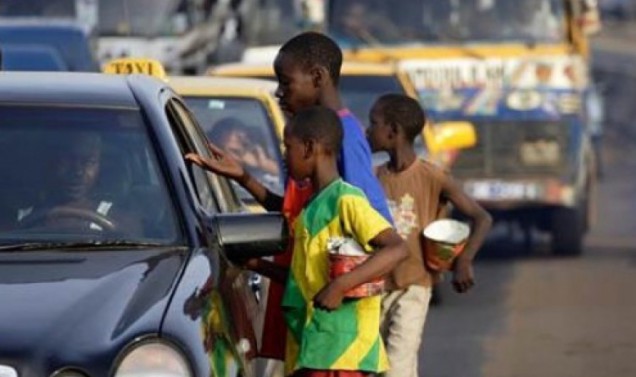
By Ibn Usman Abubakar Siddiq
“They do not beg people persistently.” — Surah Al-Baqarah 2:273
Young men who should be building businesses, learning trades, or shaping their futures now spend their days knocking on tinted glass, hoping for loose naira notes from passing motorists. There is something deeply tragic about a society where begging has become so normal that dignity is traded daily for sympathy.
The more dependence replaces hard work, the more self-worth slowly disappears. Poverty may be painful, but a culture that normalises endless public begging risks reducing human integrity to a spectacle of survival.
Having lived in Kano for nearly a decade since arriving as an undergraduate, one reality has become unmistakably clear, something many non-indigenes would also confirm: it is virtually impossible to move through a single day without coming face to face with street beggars at almost every turn.
Their footprints abound. They strut from the traffic lights at Kofar Famfo to State Road, from Janguza to the bustling Kwari Market, from neighbourhood mosques to major Jumu’ah mosques, at fuel stations within and outside the city, and in virtually every busy public space. Whether you are rushing to work, heading to the mosque, shopping at the market, or simply driving across town, chances are someone will approach you asking for alms.
For many of us, giving a few naira has become second nature. It is a habit shaped by our faith, culture, and compassion. Growing up, many of us were taught that helping those in need is not only a noble act but one that attracts divine reward.
But lately, I have found myself thinking about a troubling trend: the growing sense of entitlement among some street beggars.
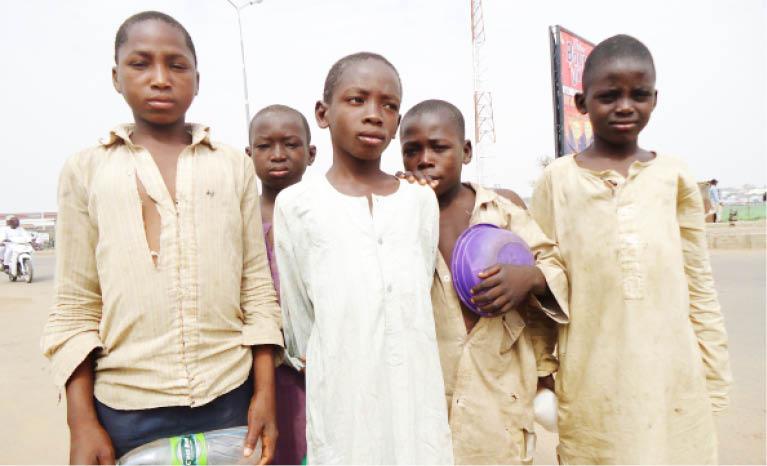
Charity, by its very nature, is voluntary, even though Islam and other religions strongly encourage it. It is something given from the heart, not something that should be demanded. Yet there are times when declining to give is met with insults, persistent pressure, or expressions of disappointment.
In such moments, it feels as though charity is no longer being appreciated as an act of kindness but expected as an obligation.
This is not to suggest that all beggars are the same. Far from it. Many people on the streets are genuinely struggling. Some are elderly, physically challenged, displaced, or simply victims of circumstances beyond their control. Their situation deserves empathy, and society has a responsibility to support its most vulnerable members.
However, there is a difference between seeking help and expecting it and the reality is that this is not a problem the government has ignored.
Back in February 2020, the Kano State Government under former Governor Abdullahi Umar Ganduje announced a ban on street begging. The idea was straightforward: reduce the number of beggars on the streets, rehabilitate vulnerable individuals, and encourage more productive means of livelihood. At the time, many residents welcomed the move and hoped it would bring lasting change.
Yet six years later, street begging remains a visible part of daily life in Kano.
In fairness, efforts have continued under the current administration. In November 2024, the state government established a committee to remove street children from the metropolis. A few months later, the Kano State Hisbah Board announced that more than 230 Almajiri children had been evacuated from the streets and placed in rehabilitation programmes that included education and social support.
Read also:Kebbi farmers trapped as Bandits demand ₦40m access fee to farmlands
Despite these efforts, the scale of the challenge remains staggering.
According to figures released by the Kano State Bureau of Statistics in February 2026, there are 6,573 street beggars across eight metropolitan local government areas in Kano. Even more striking is the age distribution. Children aged 0 to 10 account for 457 of that number, while young people between 11 and 20 years make up more than half of the total population.
Those figures stopped me in my tracks.
When more than half of the people begging on the streets are young people, it becomes difficult to view the issue solely through the lens of charity. It becomes an issue of education, unemployment, opportunity, and the future of an entire generation.
The Bureau linked the problem to poverty, unemployment, youth vulnerability, and limited access to education. Those factors cannot be ignored. They remind us that many people on the streets are not there because they want to be, but because they see few alternatives.
Still, acknowledging those realities should not stop us from having an honest conversation about dependency.
As a society, we need to ask ourselves a difficult question: are we helping people overcome poverty, or are we unintentionally helping to sustain it?
Kano, and indeed Northern Nigeria, has long been known for its generosity. It is often said that it is difficult to be stranded in the North without someone offering assistance. That spirit of kindness is something we should be proud of and preserve.
But generosity should not be mistaken for obligation. Nobody should feel compelled to give, just as nobody should feel entitled to receive.
The conversation around street begging must go beyond sympathy alone. While immediate assistance remains important, there should be greater emphasis on education, skills acquisition, rehabilitation programmes, and economic opportunities that help people become self-reliant. Giving someone food may solve today’s problem, but helping them earn a living could transform their future.
I believe compassion and accountability can coexist. We can support those who are genuinely vulnerable while also encouraging dignity, productivity, and personal responsibility.
Street begging is a complex issue with no easy answers. But one thing seems clear to me: charity serves its highest purpose when it uplifts people, not when it creates dependency. If we truly want to help, then our goal should not simply be to give more. It should be to build a society where fewer people need to beg in the first place.




 Agency News

 Abubakar Siddiq Ibn Usman