
 Agency News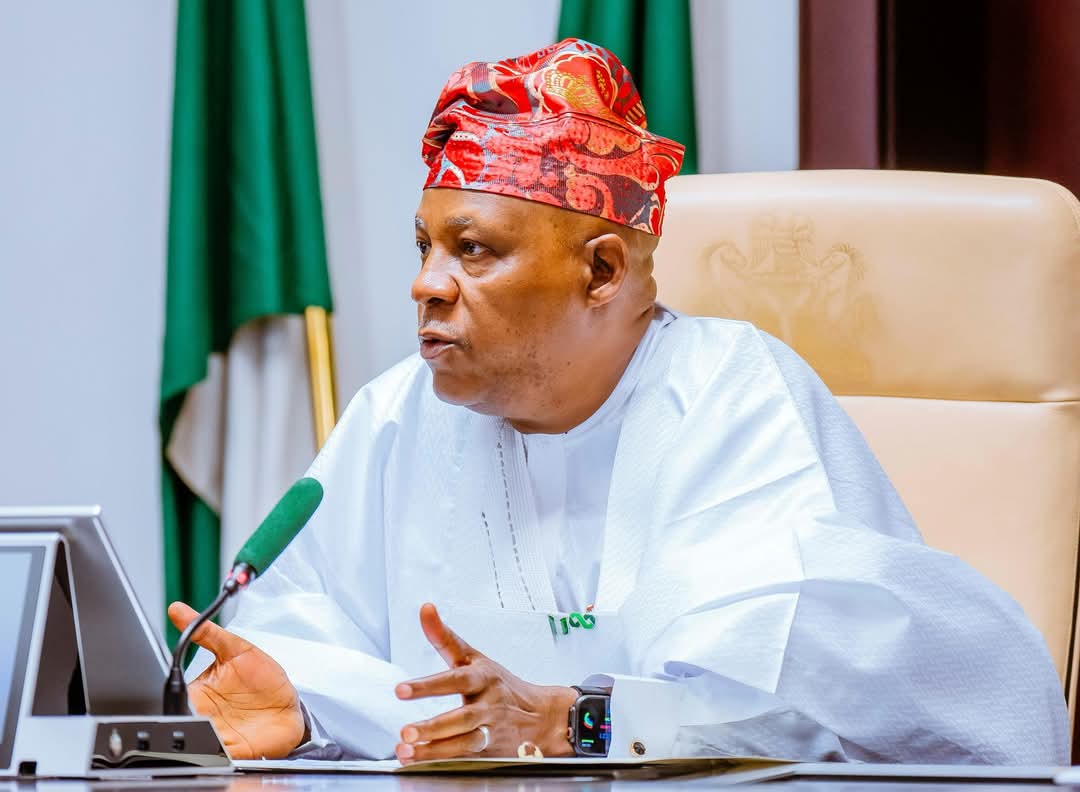
…VP tasks NPA, Customs, SON, NIS on inter-agency synergy, seeks roadmap for weights and measures reform
The Federal Government has intensified efforts toward implementing the National Single Window policy at Nigeria’s ports by 2026 as part of its drive to enhance trade facilitation, reduce bottlenecks, and strengthen efficiency.
Vice President Kashim Shettima, who disclosed this during the second meeting of the Ports and Customs Efficiency Committee at the Presidential Villa on Thursday, said the policy aims to harmonize documentation, minimize human contact, and ensure full transparency in cargo clearance.
According to him, the initiative would be a “game changer” for the nation’s ports, targeting a reduction in cargo clearance time from an average of 21 days to less than seven days by the end of 2026.
“By the end of 2026, we aim to reduce average cargo clearance time in Nigeria to under seven days and to position our ports among the top three most efficient trade gateways on the continent,” the Vice President said. “The forthcoming implementation of the National Single Window in the first quarter of next year will harmonize documentation, minimize human contact, and bring full transparency to the cargo clearance process.”
Senator Shettima also directed key port agencies — including the Nigerian Ports Authority (NPA), Nigeria Customs Service (NCS), National Agency for Food and Drug Administration and Control (NAFDAC), Standards Organisation of Nigeria (SON), and Nigeria Immigration Service (NIS) — to produce a roadmap for strengthening the nation’s weights and measures framework.
The framework, he explained, is critical for consumer protection and trade fairness, ensuring weighing and measuring equipment used in commercial transactions are accurate and standardized.
He expressed dissatisfaction with Nigeria’s current cargo dwell time, which averages between 18 and 21 days, compared to Ghana’s five to seven days and Cotonou’s four days.
“The cost of clearing goods in Nigeria is estimated to be 30 percent higher than in many of our regional peers,” he said. “These inefficiencies are not just statistics; they are symptoms of an economic ailment that costs us investments, drives up consumer prices, and weakens our export competitiveness. We simply cannot afford to continue down this path.”
Read also:Nigeria’s FATF exit to boost infrastructure investment— ICRC
The Vice President expressed optimism that the Executive Order on Joint Physical Inspection currently awaiting President Bola Tinubu’s assent will mark a major step in reversing these inefficiencies.
“It marks the dawn of a new era — one where agencies work together, systems speak a common language, and traders and investors can depend on predictability, transparency, and speed,” he said.
Calling for stronger inter-agency collaboration, Shettima emphasized that reform efforts could only succeed through unity among all port stakeholders.
“The era of siloed operations must end. Inter-agency rivalry must give way to inter-agency synergy. We are only as efficient as our collaboration allows,” he stated.
Earlier, the Director-General of the Presidential Enabling Business Environment Council (PEBEC), Princess Zahrah Audu, decried the losses caused by inefficiency at the nation’s ports, stressing that the committee’s work reflects a “shared commitment to making Nigeria’s ports globally competitive, transparent, and efficient.”
Similarly, the Managing Director of the Nigerian Ports Authority (NPA), Dr. Abubakar Dantsoho, highlighted ongoing reforms to enhance port performance, citing successes recorded through joint inspections and inter-agency cooperation.
Dantsoho emphasized the need for technological adoption, infrastructure development, and human capacity building as key enablers for port efficiency.
“Until there is collaboration and partnership, you cannot achieve efficiency at the ports,” he said. “We must continue to improve on technology, infrastructure, and operational synergy to ensure Nigeria remains competitive across the sub-region and beyond.”


 admin
admin

 Rabiu M. Hamza