
 Abubakar Siddiq Ibn Usman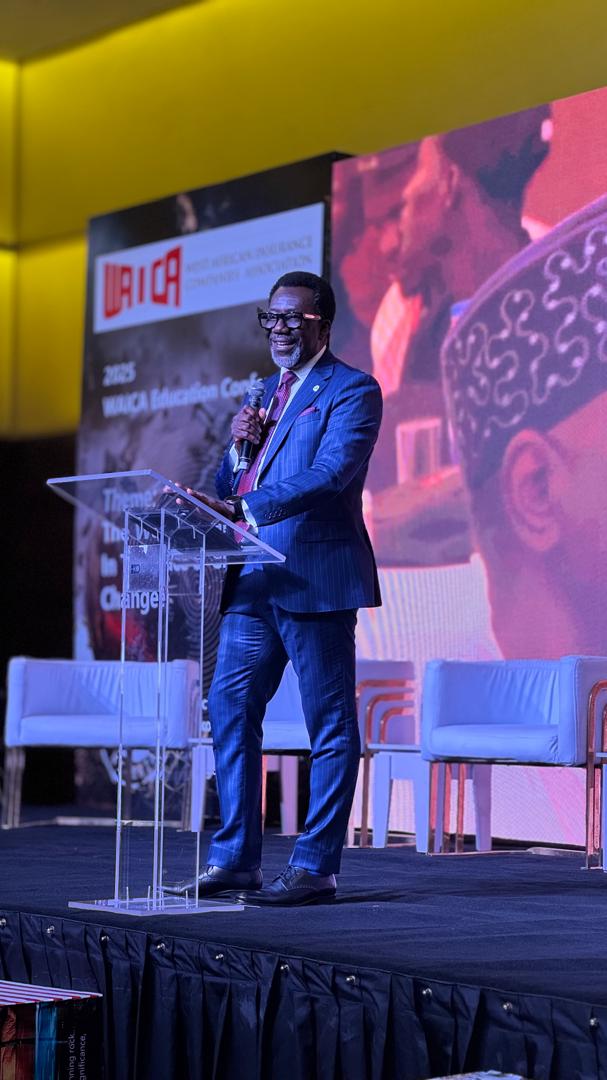
Barbara Bako, Abuja.
The Commissioner for Insurance, Mr. Olusegun Ayo Omosehin, has called on West African insurers to move beyond traditional business models and take the lead in driving the region’s climate resilience and sustainable development agenda.
Speaking at the 2025 West African Insurance Companies Association (WAICA) Conference in Lagos, themed “The West African Insurer in the Face of Climate Change,” Omosehin said the insurance profession must rise above its conventional boundaries and embrace a broader purpose that supports equity and transformation across the region.
“There are moments in history when a profession must rise beyond its traditional boundaries—when its purpose must stretch beyond profit and policy to become a pillar of resilience, equity, and transformation. This is one of those moments,” he said.
Omosehin noted that climate change is “rewriting the narrative” of West Africa, testing the strength of economies, the endurance of communities, and the responsiveness of institutions.
“It has become a macroeconomic threat, influencing fiscal policy, national budgets, and the stability of our financial systems,” he stated.
He highlighted the human and economic cost of climate-related disasters, saying, “In 2024, flooding affected over 7.5 million people across 16 West African countries.Nigeria alone accounted for 1.3 million displaced persons.”
“In 2025, over 33,000 Nigerians were displaced, 3,800 homes destroyed, and 5,300 hectares of farmland submerged—threatening food security and economic stability,” he added.
The Commissioner said the Federal Government’s response through the Nigerian Insurance Industry Reform Act (NIIRA) 2025 has modernized the regulatory framework and strengthened the resilience of insurers.
“These reforms are not merely technical—they are foundational to our national preparedness and long-term sustainability,” he stated.
Read also:Technology vital for boosting investor confidence — SEC DG
Omosehin urged insurers across the subregion to “innovate boldly, developing parametric and microinsurance products tailored to our region’s climate realities; invest in data and technology to improve climate modelling, risk assessment, and product delivery; collaborate across borders, pooling risks and resources to build regional resilience; expand inclusion, ensuring insurance reaches farmers, market women, artisans, and micro-entrepreneurs—the backbone of our economies; and prioritize capacity building, investing in the next generation of insurance professionals.”
He stressed that “insurance must evolve from a transactional service to a strategic enabler of development.”
“As a regulator, the National Insurance Commission (NAICOM) is committed to enabling policies that foster collaboration between operators, regulators, and development partners. Strengthening climate resilience across West Africa demands a unified approach—one that blends sound regulation, market innovation, and strategic partnerships,” he said.
Quoting an African adage, Omosehin remarked, “Rain does not fall only on one roof.”
He explained that the wisdom behind the saying “speaks to our shared vulnerability, and our shared responsibility. Climate change does not respect borders. Its impacts are felt in every nation, every community, and every sector. Just as rain falls on many roofs, so too must our response be collective.”
He called for stronger cooperation among insurers across the subregion, emphasizing the need for “collective solutions rooted in regional cooperation and resilience,” and urged stakeholders to make the conference “a turning point—where insurance becomes central to our climate response and a driver of inclusive, sustainable development.


 Rabiu M. Hamza
 admin
admin



 Agency News