
 admin
admin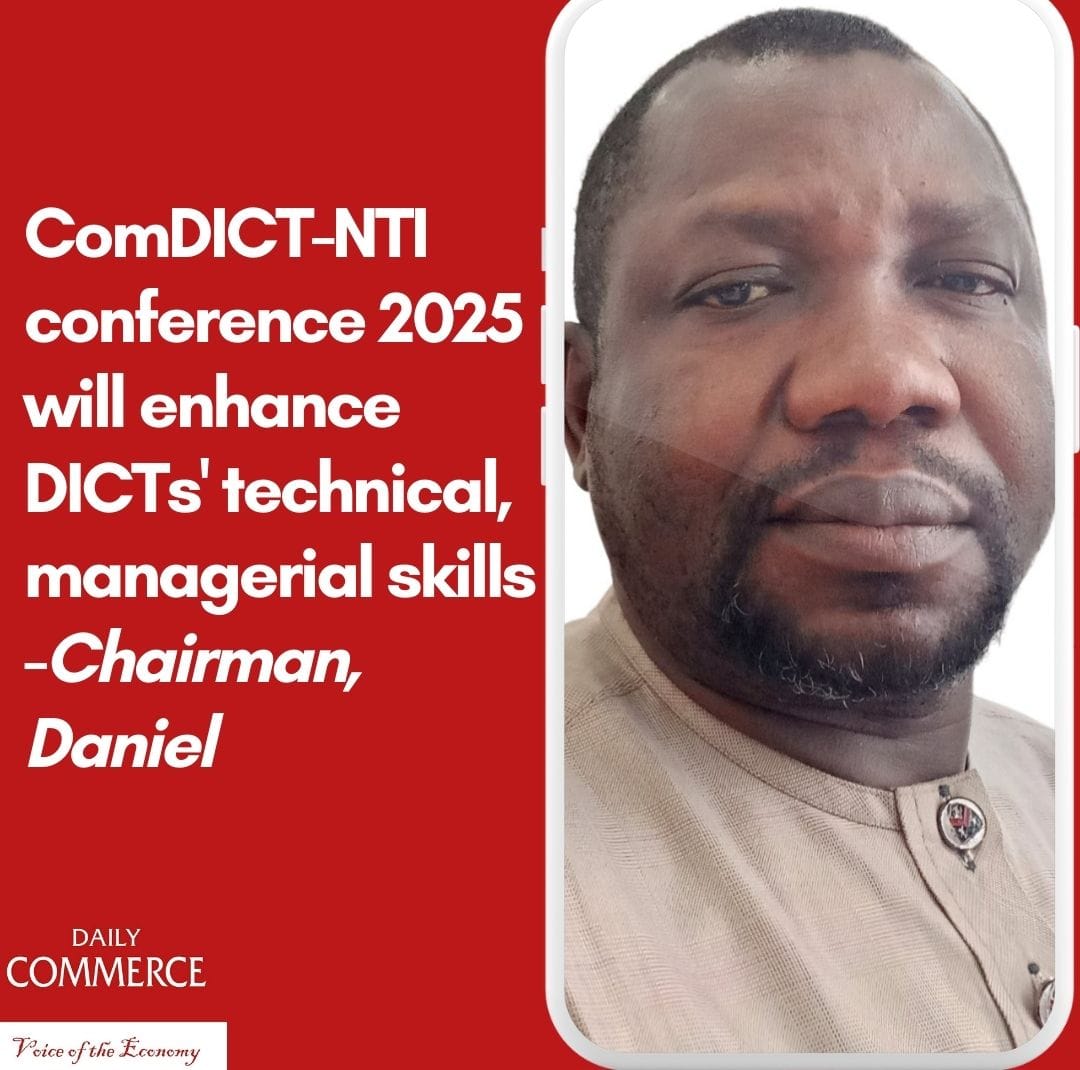
The rapid transformation of the global digital landscape has placed ICT at the heart of innovation and progress in the education sector. In Nigeria, the Committee of Directors of ICT of Nigerian Tertiary Institutions (ComDICT-NTI) is playing a pivotal role in steering this transformation across public universities, polytechnics, and colleges of education. In this exclusive interview, Daily Commerce speaks with Mr. Daniel Inusa Yakmut, the Chairman of ComDICT-NTI, who shares insights to the Committee’s up coming conference from 12th – 13th May, 2025, highlighted the vision, achievements, challenges, and aspirations of the association for the future of ICT in Nigerian tertiary education.
DC: Can you tell us about the Committee of Directors of ICT of Nigerian Tertiary Institutions (ComDICT-NTI)?
Daniel: ComDICT-NTI was established to promote and enhance the economic and social welfare of ICT Directors in Nigerian tertiary institutions. Our mission is to ensure that priority areas for ICT intervention are clearly identified, strategic partnerships with key stakeholders are built and sustained, duplication of projects is minimized, and the impact of ICT initiatives is maximized. We also focus on developing and sustaining capacities to drive ICT growth across institutions.
DC: What contributions has ComDICT-NTI made to the development of government-owned tertiary institutions in Nigeria?
Daniel: We’ve focused on capacity building through skill development, enabling ICT Directors (DICTs) to fulfill their responsibilities more effectively. We’ve worked closely with funding agencies such as TETFund to design and implement impactful ICT interventions in our institutions. Today, ComDICT-NTI serves as a reliable reference point for DICTs seeking technical guidance and support on ICT matters.
DC: Your upcoming annual conference is said to be impactful. What are your expectations from this gathering of ICT Directors from Nigerian tertiary institutions?
Daniel: We’re excited to host all our members at the upcoming conference. We’ve designed a robust agenda that addresses critical issues in ICT development. The discussions will enhance both the technical and managerial competencies of DICTs. We are confident the conference will be highly impactful and beneficial to all participants. The Conference will hold from 12th to 13th May, 2025 at Nicon Luxury Hotel, Central Business District, Abuja.
DC: How well has ComDICT-NTI been accepted by Vice-Chancellors, Rectors, and other government agencies?
Daniel: ComDICT-NTI has gained considerable recognition and acceptance. We maintain positive relationships with institutional heads across universities, polytechnics, and colleges. We’ve collaborated with the Committee of Vice-Chancellors on skill development and ICT matters. We also plan to engage further with regulatory agencies during and after the conference, deepening our collaboration for the advancement of ICT in our institutions.
DC: What are your key appeals or requests to the government?
Daniel: We urge the government to engage more closely with us on ICT-related issues, particularly in integrating ICT into the fabric of tertiary education. Our insights and practical experience can significantly contribute to aligning national ICT initiatives with the realities and needs of the education sector.
DC: How is ComDICT-NTI addressing the challenges of digital transformation in tertiary education?
Daniel: The foundation of digital transformation is skills. DICTs must be equipped not only technically but also in management. We advocate for a holistic approach—addressing infrastructure deficits, bridging skills gaps, encouraging local content development, and fostering collaboration between the government, academia, industry, and international partners.
DC: In what ways is ComDICT-NTI collaborating with international or private sector partners to improve ICT infrastructure in institutions?
Daniel: As an association, we encourage individual institutions to take advantage of available support from both local and international partners for ICT development. ComDICT-NTI aims to create an enabling environment where partnerships and collaborations can flourish for the collective benefit of the education sector.
DC: What are the major ICT challenges facing Nigerian tertiary institutions today, and how is COMDICT-NTI helping to solve them?
Daniel: The biggest challenges are access to reliable electricity and affordable internet bandwidth. If institutions had stable power and broadband access, many other ICT issues would be easier to tackle. Funding is another critical challenge—adequate funding would enable proper campus networking and infrastructure development. ComDICT-NTI continues to advocate for improved funding and targeted interventions in power and internet connectivity.
DC: Are there any success stories or milestones achieved by ComDICT-NTI that you’d like to highlight?
Daniel:We’ve made modest but meaningful progress. We now have a coordinated platform for DICTs to speak with one voice on national ICT issues. We’ve been instrumental in guiding ICT-related government interventions, especially through our collaboration with TETFund. Additionally, we’ve enhanced our members’ capacities to manage institutional ICT systems effectively. In just a year and a half, we’ve achieved quite a bit.
DC: What role does COMDICT-NTI play in shaping ICT policy or advising government bodies on ICT-related decisions in the education sector?
Daniel:: ComDICT-NTI is well-positioned to serve as a strategic advisory body, leveraging our technical expertise and institutional experience. Our dual role as practitioners and innovators allows us to contribute meaningfully to ICT policy formulation—ensuring they are practical, inclusive, and future-focused. By bridging gaps between institutions, government, and industry, we aim to support Nigeria’s vision of becoming a knowledge-driven digital economy.
DC: How do you envision the future of ICT in Nigerian tertiary education, and what role will ComDICT-NTI play in that future?
Daniel: The future of ICT in tertiary education is transformative. ComDICT-NTI will continue to act as a catalyst—driving policy advocacy, capacity building, innovation, and digital equity. By harnessing our collective knowledge and influence, we can help modernize learning environments, bridge the digital divide, and establish Nigerian institutions as global centers of excellence.




 Rabiu M. Hamza
 Agency News